
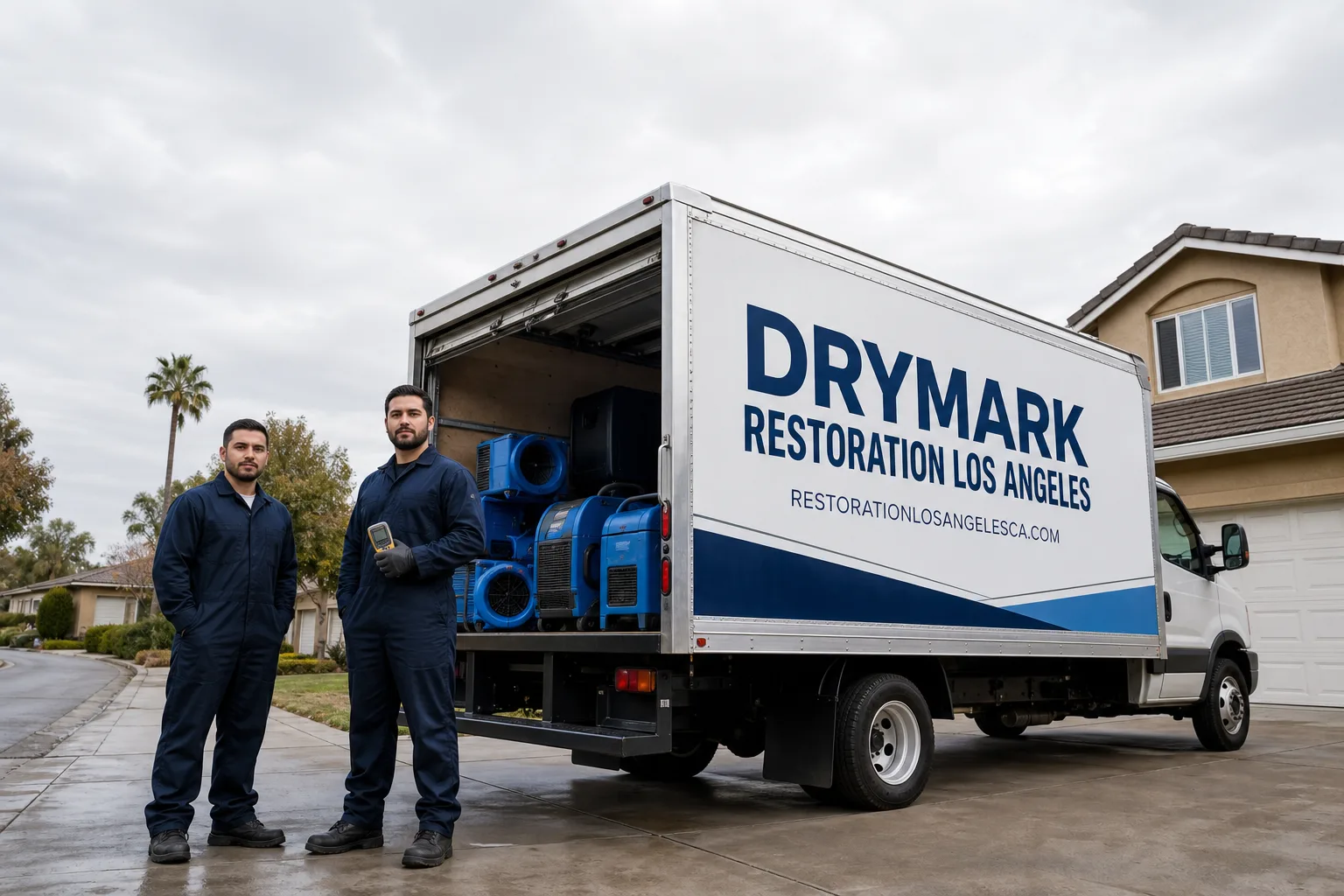
Free visual inspection and a written scope of work before any mitigation begins - photos, moisture readings, and drying logs go in your claim file
The scope we write is the scope we bill. Anything new gets shown to you, in writing, before we touch it.
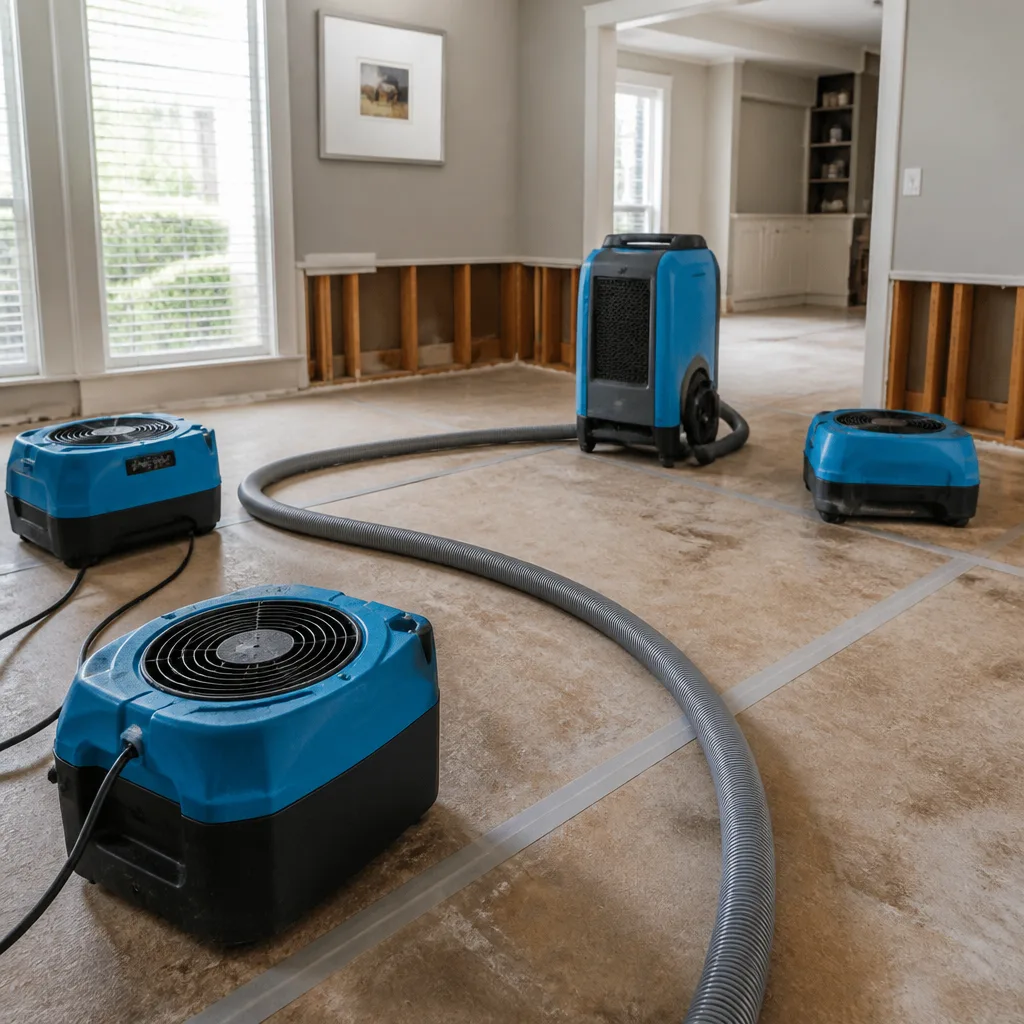
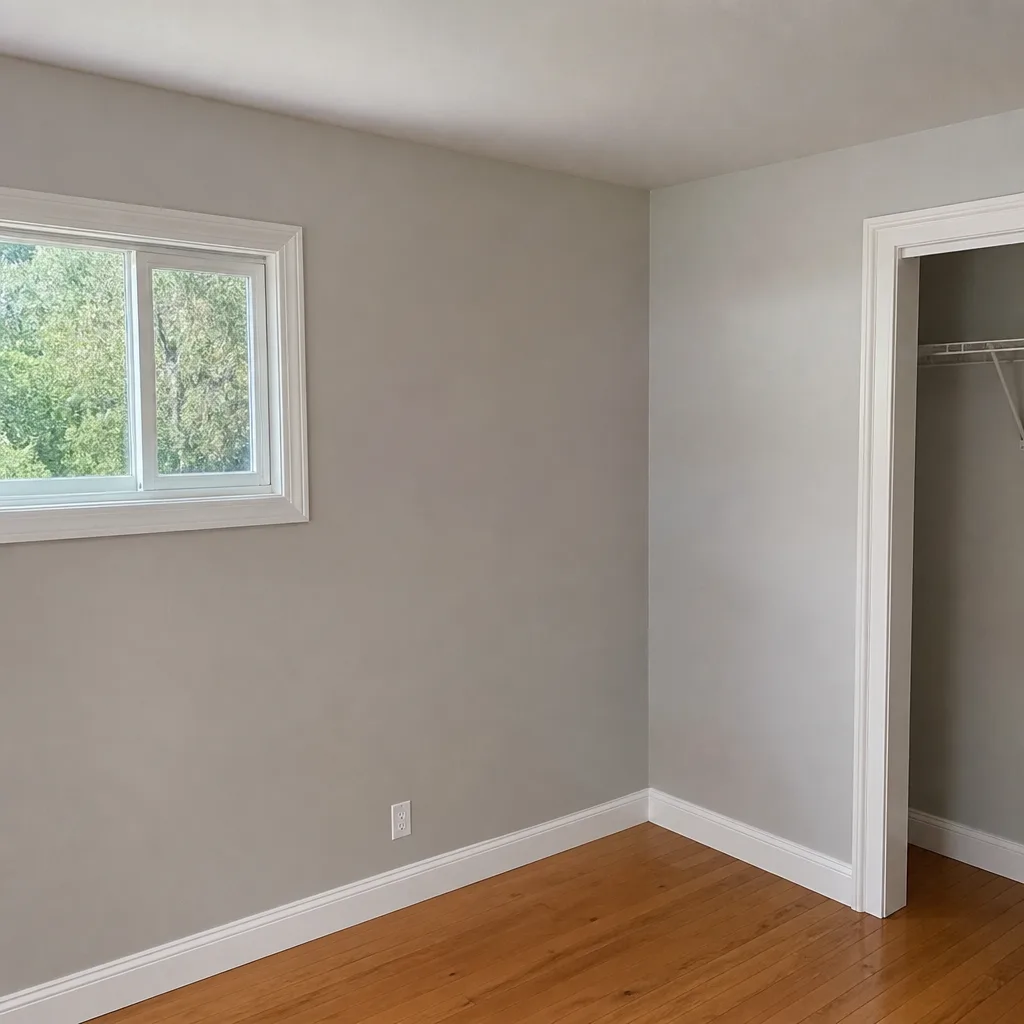
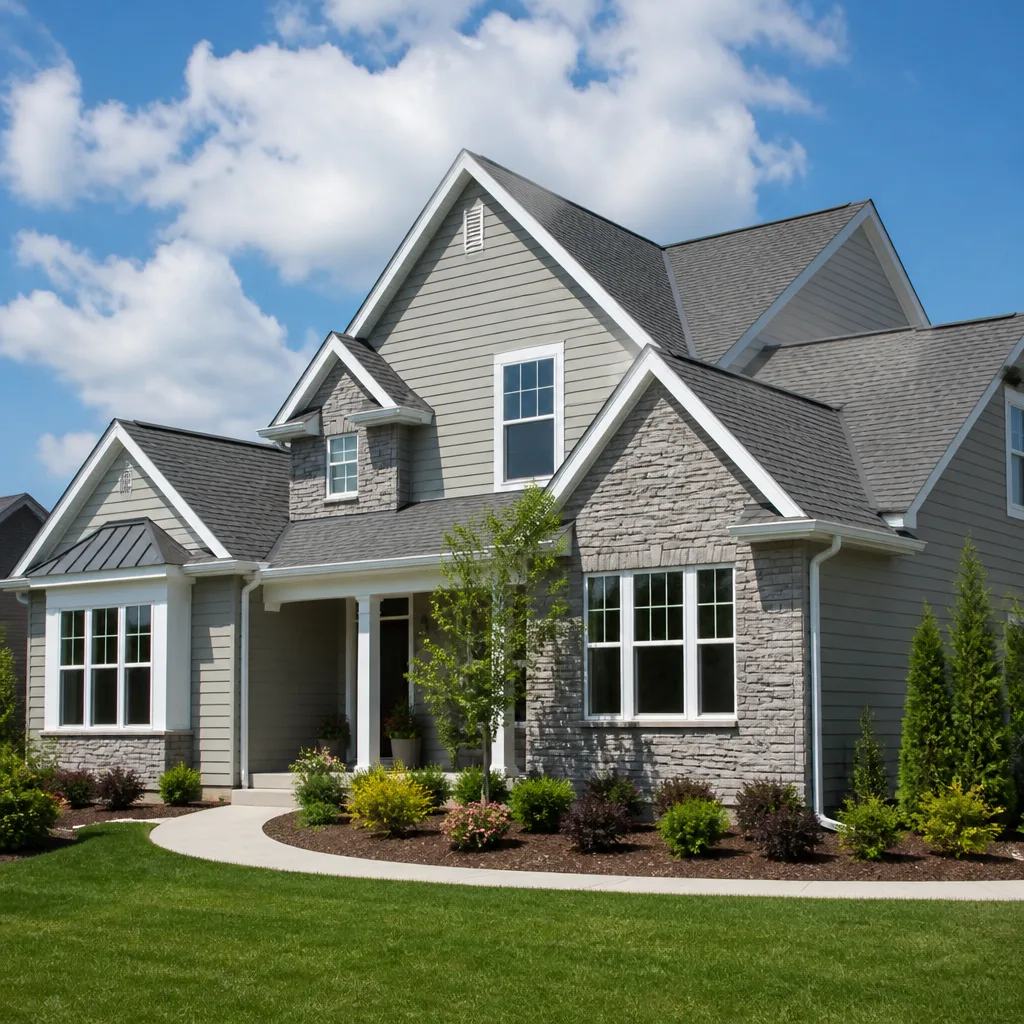
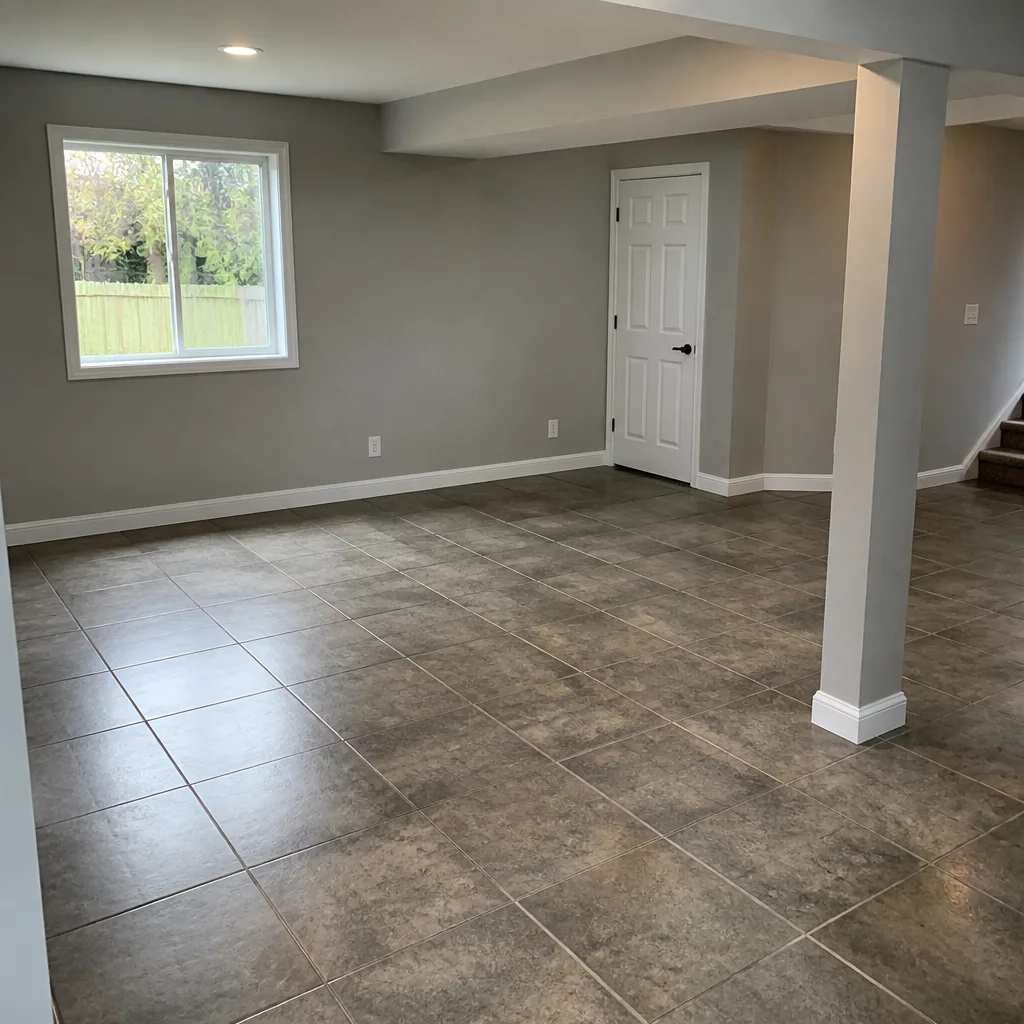
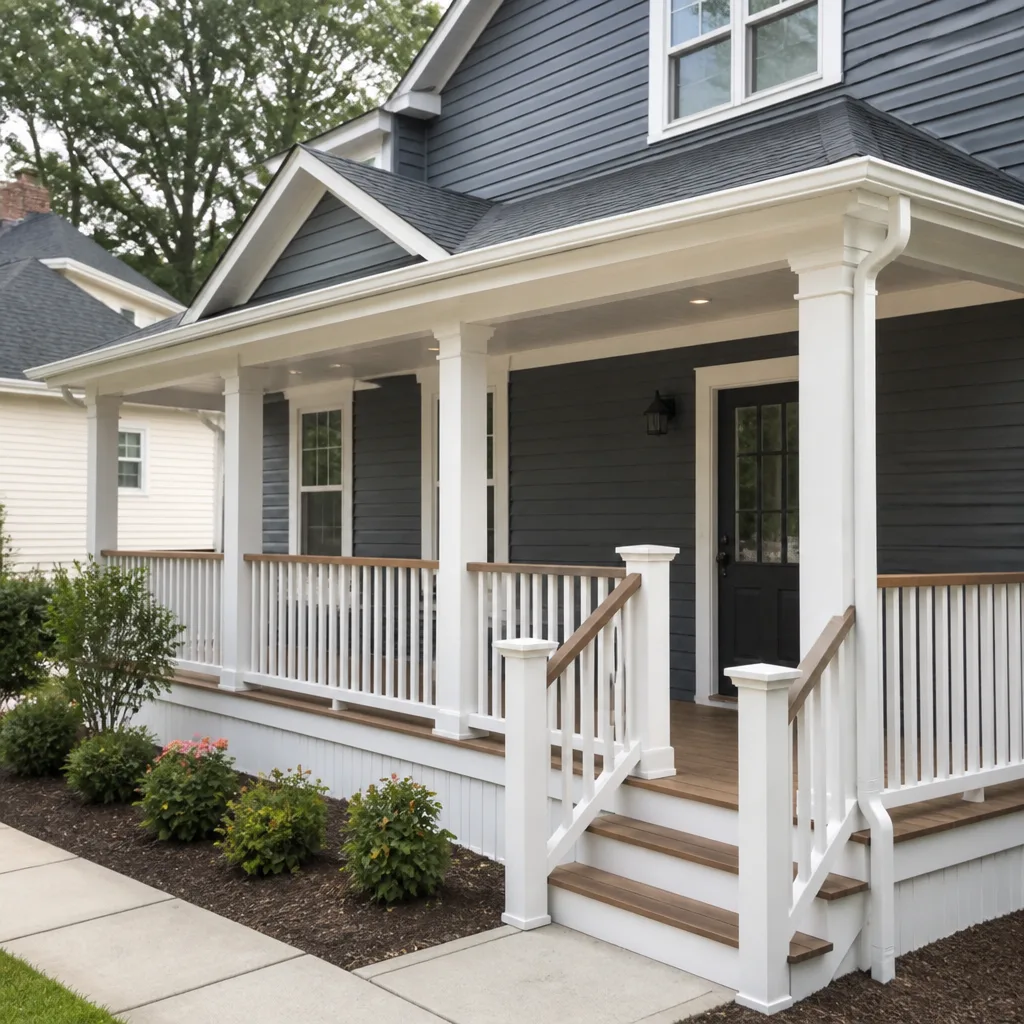
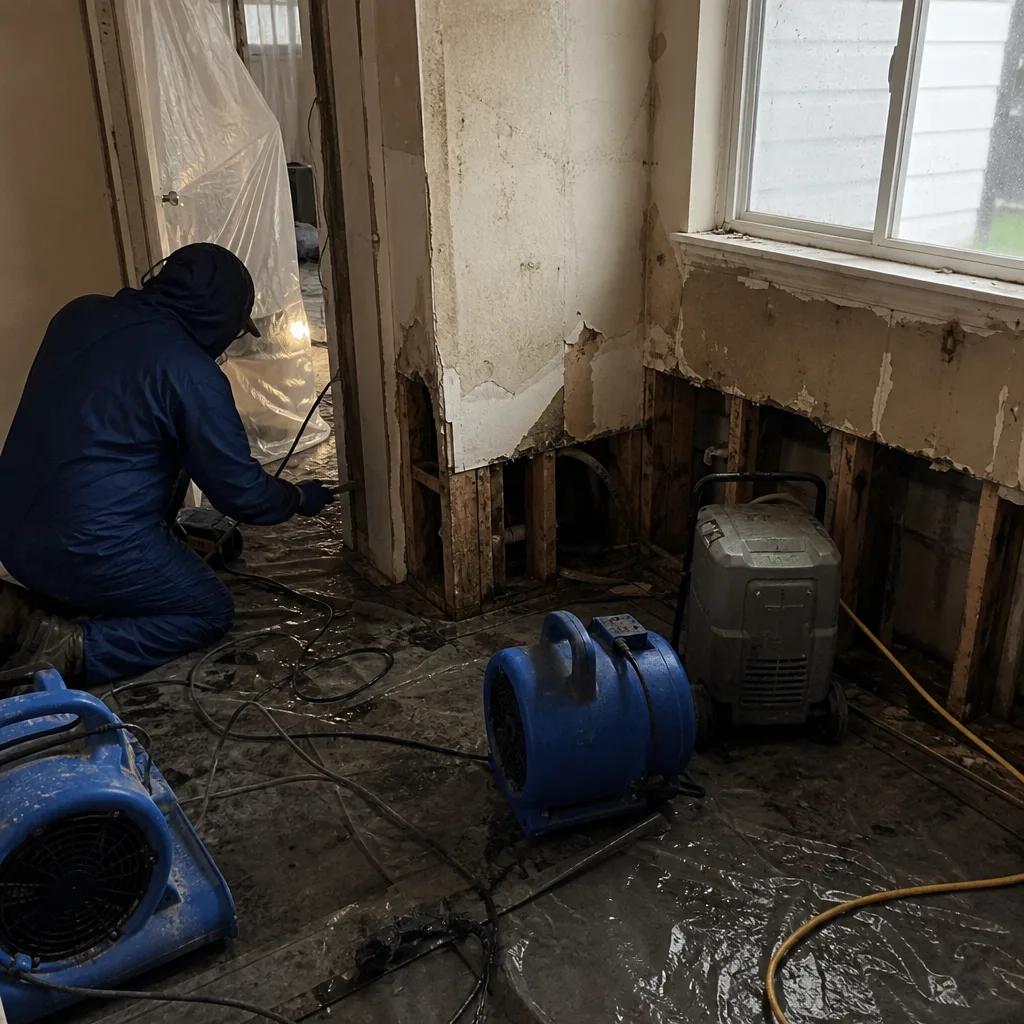 Before
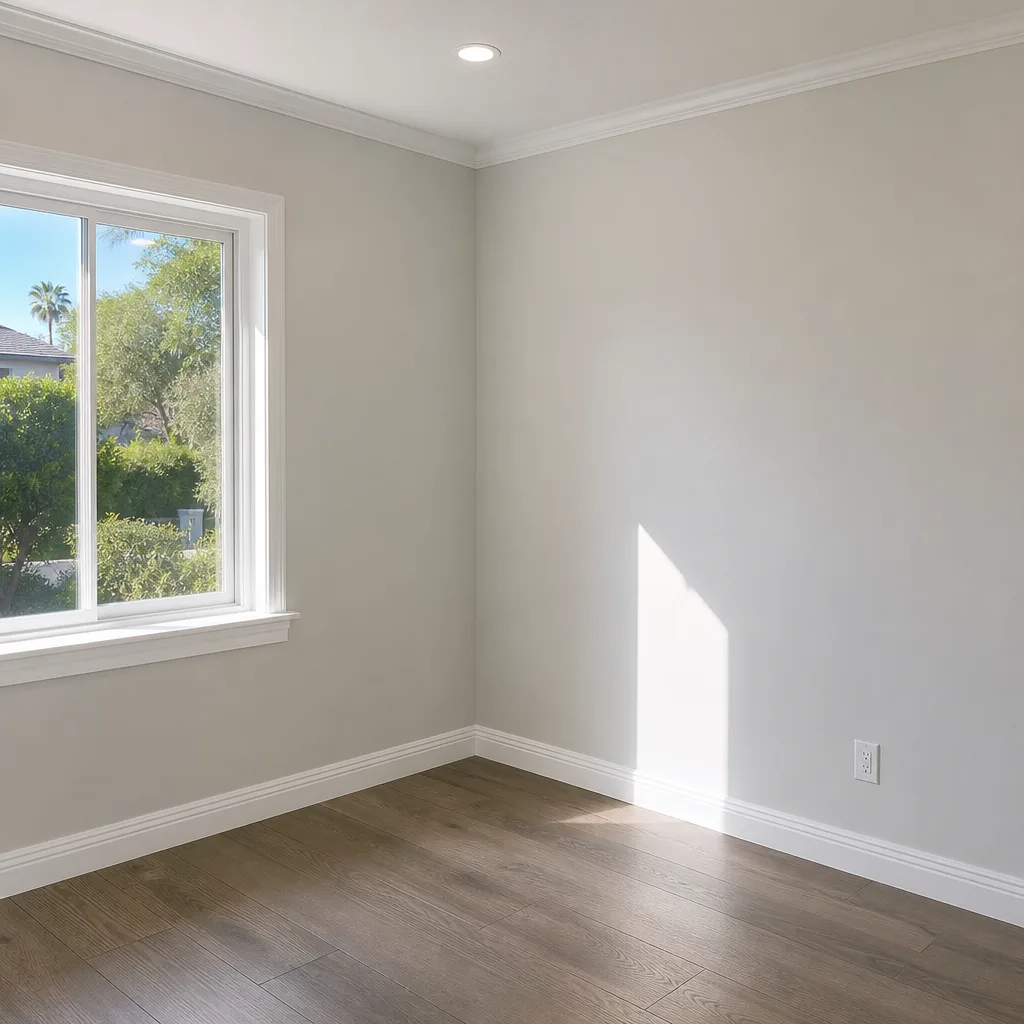 After
After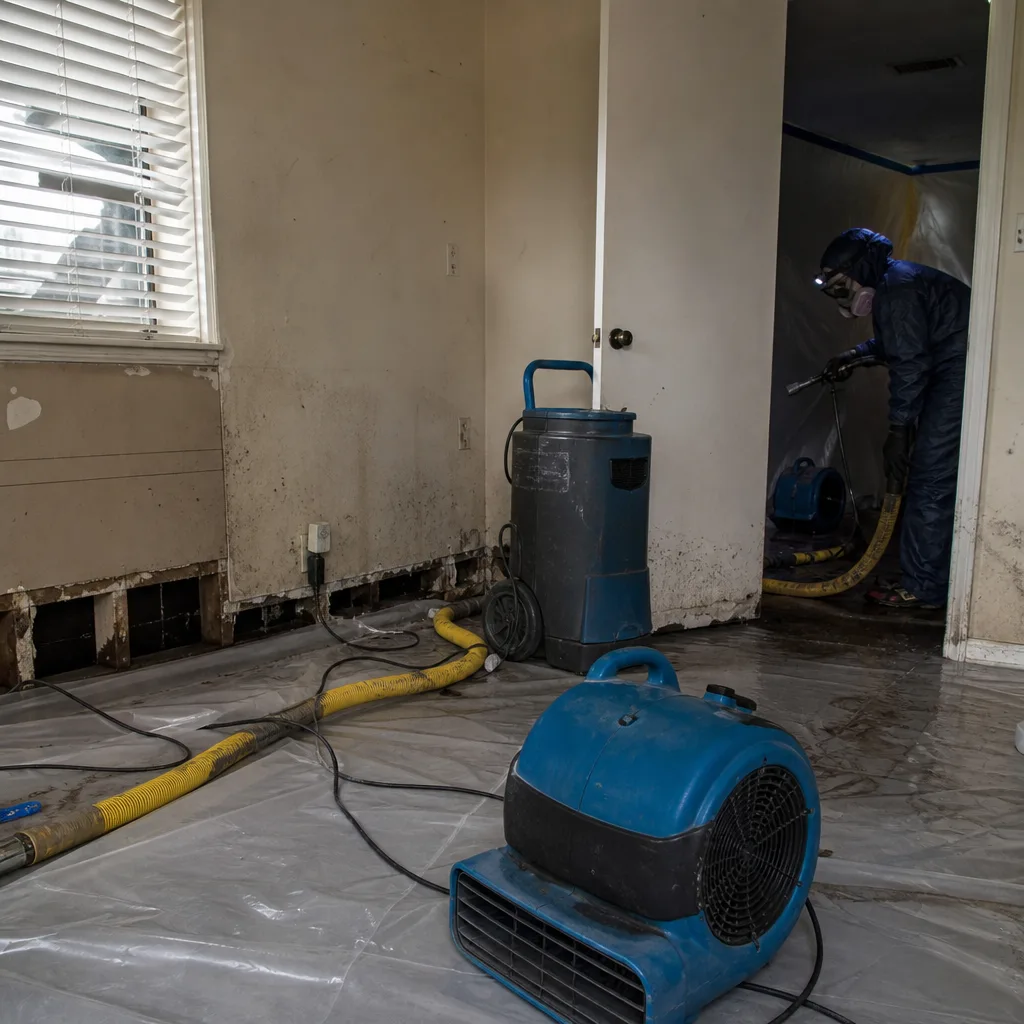 Before
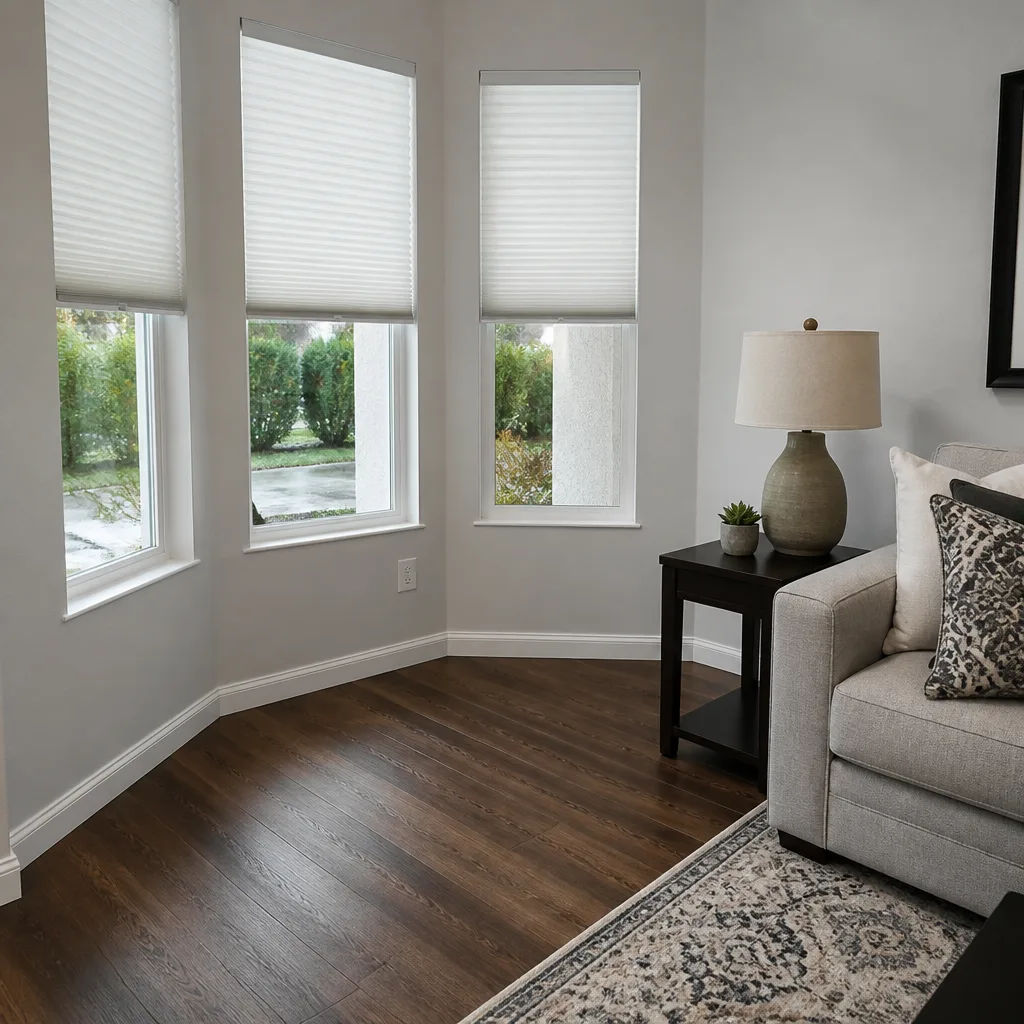 After
After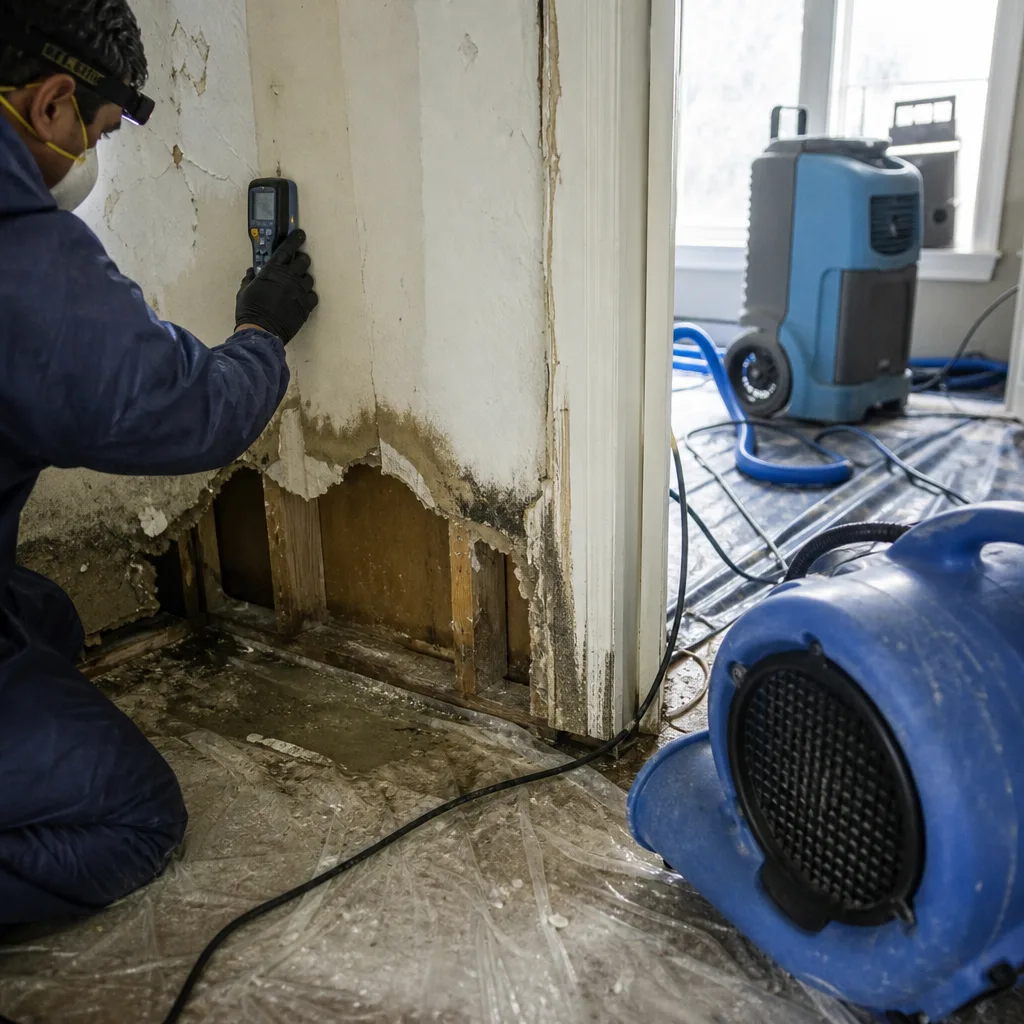 Before
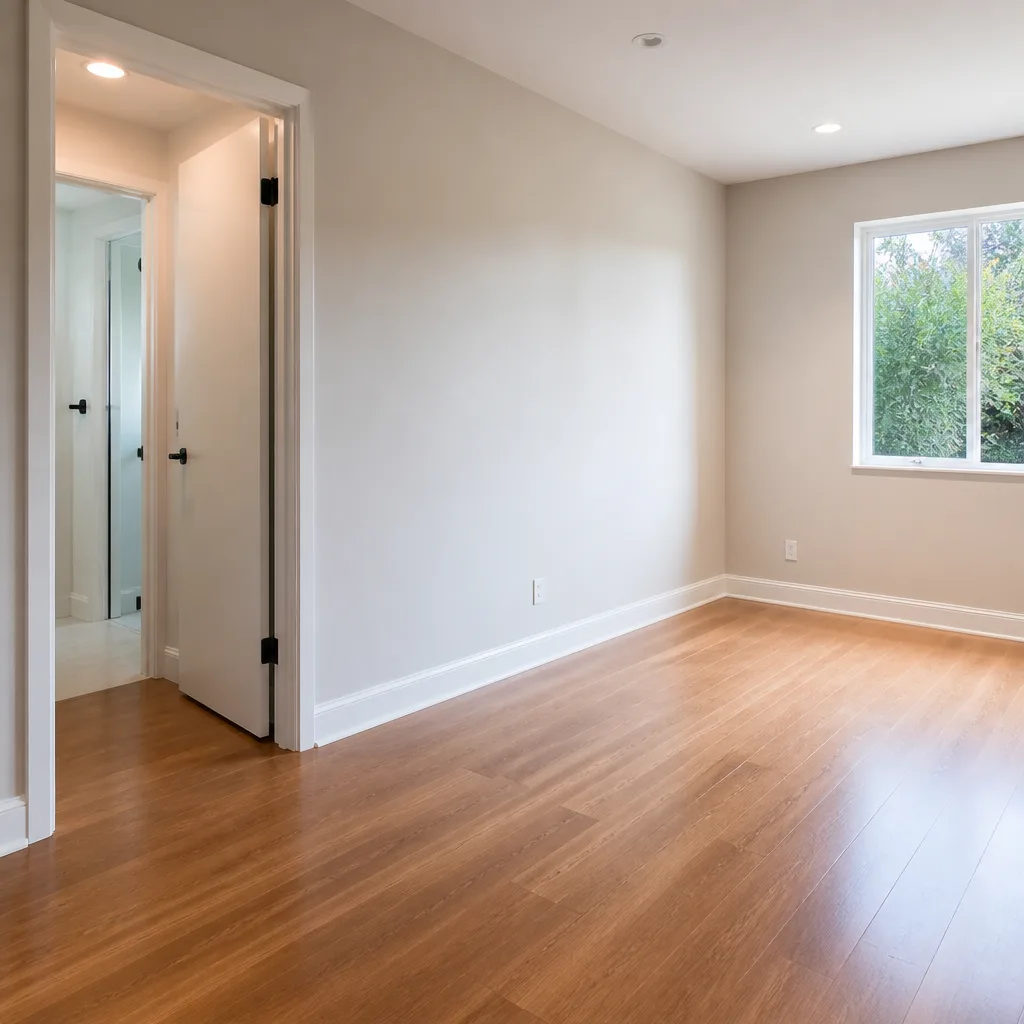 After
AfterTrusted Mold Remediation for Los Angeles Homeowners
Our Mold Remediation in Los Angeles typically costs $1,200 for a contained bathroom issue up to $8,500+ for whole-home treatment after water damage, with most jobs falling in the $2,800-$5,400 range depending on square footage and material type. DryMark Restoration Los Angeles completes most residential mold remediation projects in 3-5 business days, with emergency containment available same day when structural materials are actively compromised. Call (424) 351-3396 for a written estimate before any work begins.
Since 2011, Alicia Brennan has led our team through more than 12,000 restoration jobs across Los Angeles, and we’ve learned that mold claims get denied for the same reason water claims do: missing documentation. We built our home operation around The Haven Standard, a set of written protocols that produces the moisture logs, photo records, and itemized scopes that turn restoration invoices into payable insurance claims. In neighborhoods from Venice to Studio City, we’ve seen how Los Angeles’s mild winters and coastal humidity create conditions where mold colonizes behind intact drywall for months before anyone smells it. Our crews arrive with FLIR thermal cameras, moisture meters calibrated to ASTM standards, and the understanding that your adjuster will ask for proof - so we collect it from the first visit.
Live phone coverage runs 24 hours a day, 7 days a week. No voicemail trees. No next-business-day callbacks while spores are still active.
What Our Mold Remediation Service Includes
Mold Inspection & Testing
You need Mold Inspection & Testing when you smell mustiness but cannot locate the source, when a home purchase inspection flags possible growth, or after any water intrusion event even if surfaces look dry. In Los Angeles, we regularly find hidden colonization in Brentwood hillside homes where foundation moisture meets warm crawl spaces, and in Playa del Rey properties where salt air corrosion compromises window seals. Our inspection includes air sampling with spore traps, surface swabs sent to third-party labs, and thermal imaging to map moisture gradients behind walls. You receive a written report with lab results, moisture readings by room, and a photo record of every finding - documentation that satisfies most insurance adjusters without follow-up requests.
Mold Removal
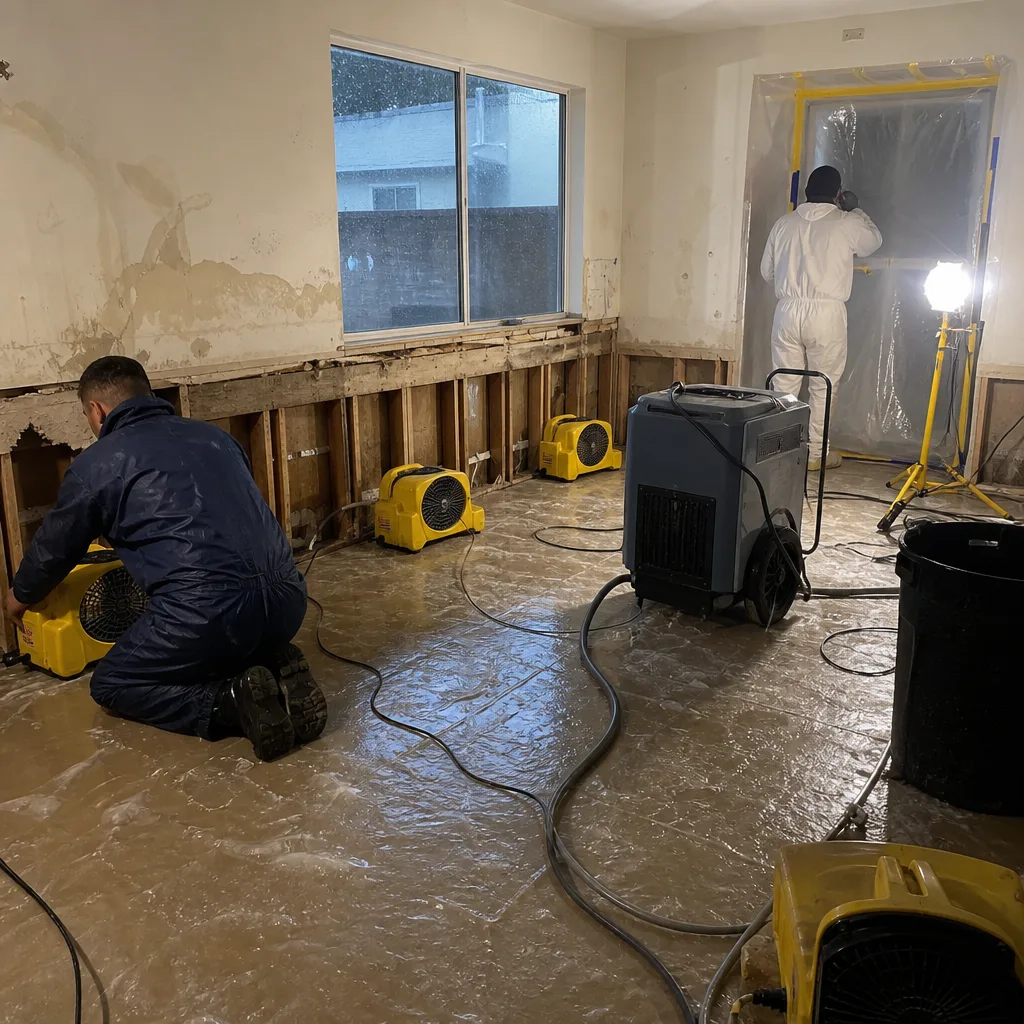
Mold Removal is the physical extraction of colonized materials: drywall, insulation, carpet pad, subfloor, or framing members that testing confirms are non-salvageable. You need it when visible growth exceeds 10 square feet, when HVAC systems test positive for contamination, or when porous materials have been wet for more than 48 hours. In Westchester and Inglewood homes built during the 1950s-1970s construction boom, we often remove multiple layers of previous repairs that trapped moisture rather than solved it. Our crews seal the work zone with 6-mil polyethylene, establish negative air pressure with HEPA-scrubbed exhaust, and dispose of contaminated materials per California Title 22 hazardous waste protocols. Every removal action is photo-documented with before, during, and after images.
Black Mold Remediation
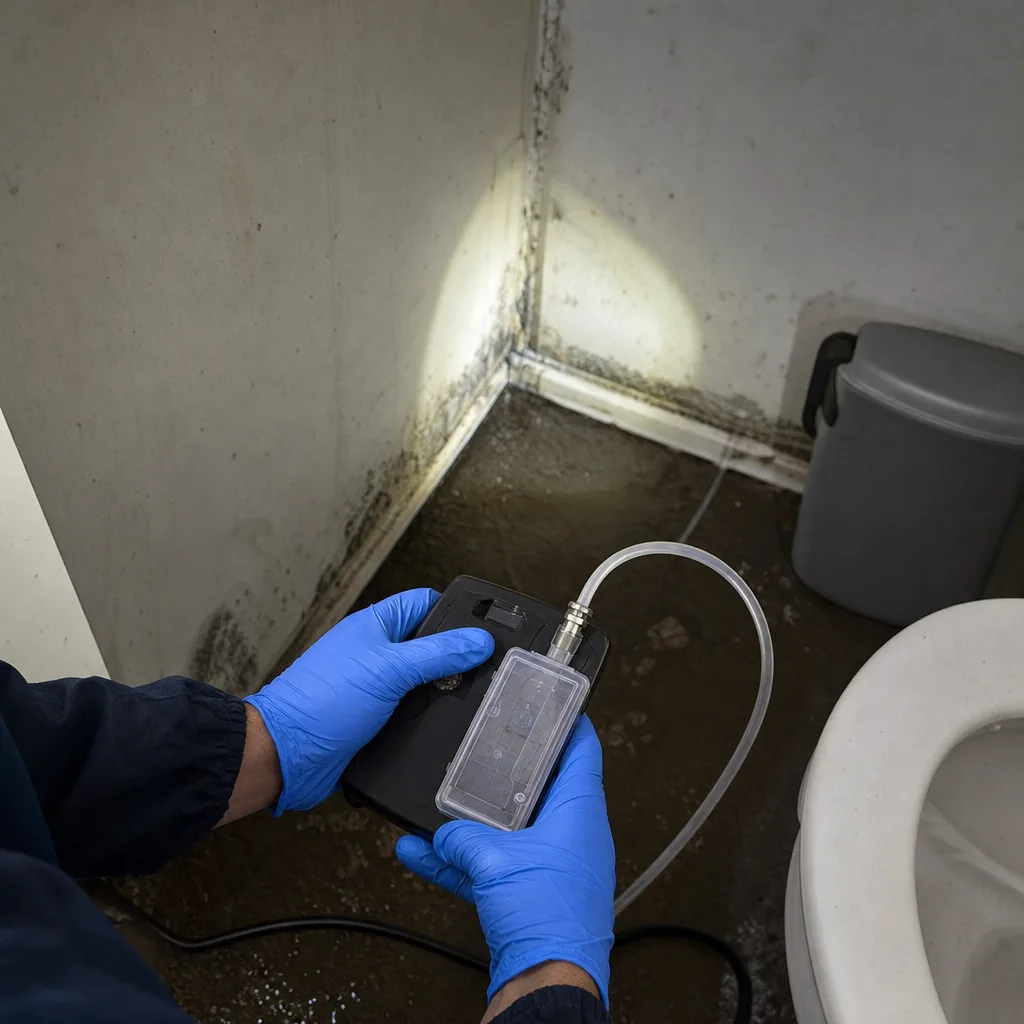
Black mold remediation addresses toxigenic species, primarily Stachybotrys chartarum, which requires stricter containment and longer clearance testing than common household molds. You need this service when lab identification confirms Stachybotrys, when occupants report persistent respiratory symptoms, or when long-term water damage has saturated cellulose materials. In Hawthorne and Lennox, we’ve treated black mold in homes where slow plumbing leaks behind washing machines went unreported for months. Our protocol adds full-face respirators and disposable protective suits for technicians, doubled containment barriers, and 48-hour post-remediation air sampling before we release the space. The written scope specifies exactly which materials are removed versus cleaned, so there’s no dispute about what “done” means.
Air Quality Restoration
Air quality restoration returns indoor spore counts to outdoor-equivalent levels through source removal plus mechanical filtration and ventilation correction. You need it when post-remediation testing shows elevated airborne particulates, when HVAC ductwork tests positive for colonization, or when occupants have asthma, allergies, or immunocompromised conditions. In Beverly Hills and Brentwood, we install HEPA filtration on our Phoenix and XPOWER air scrubbers and run them continuously during and after remediation, with particle counts logged every four hours. Duct cleaning follows NADCA standards if testing indicates internal contamination. The final deliverable is a clearance report comparing indoor and outdoor spore counts, with the photo record showing scrubber placement and filter condition at startup and completion.
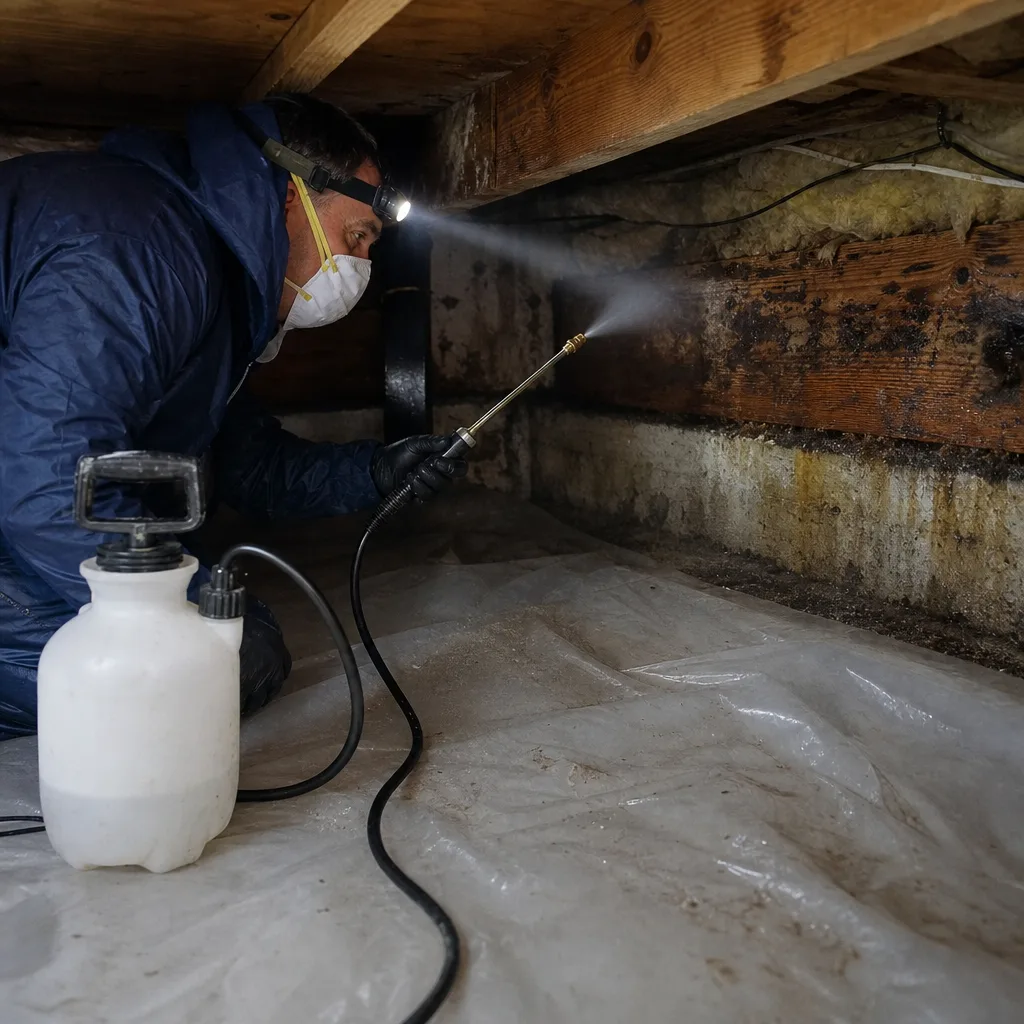
Crawl Space Treatment
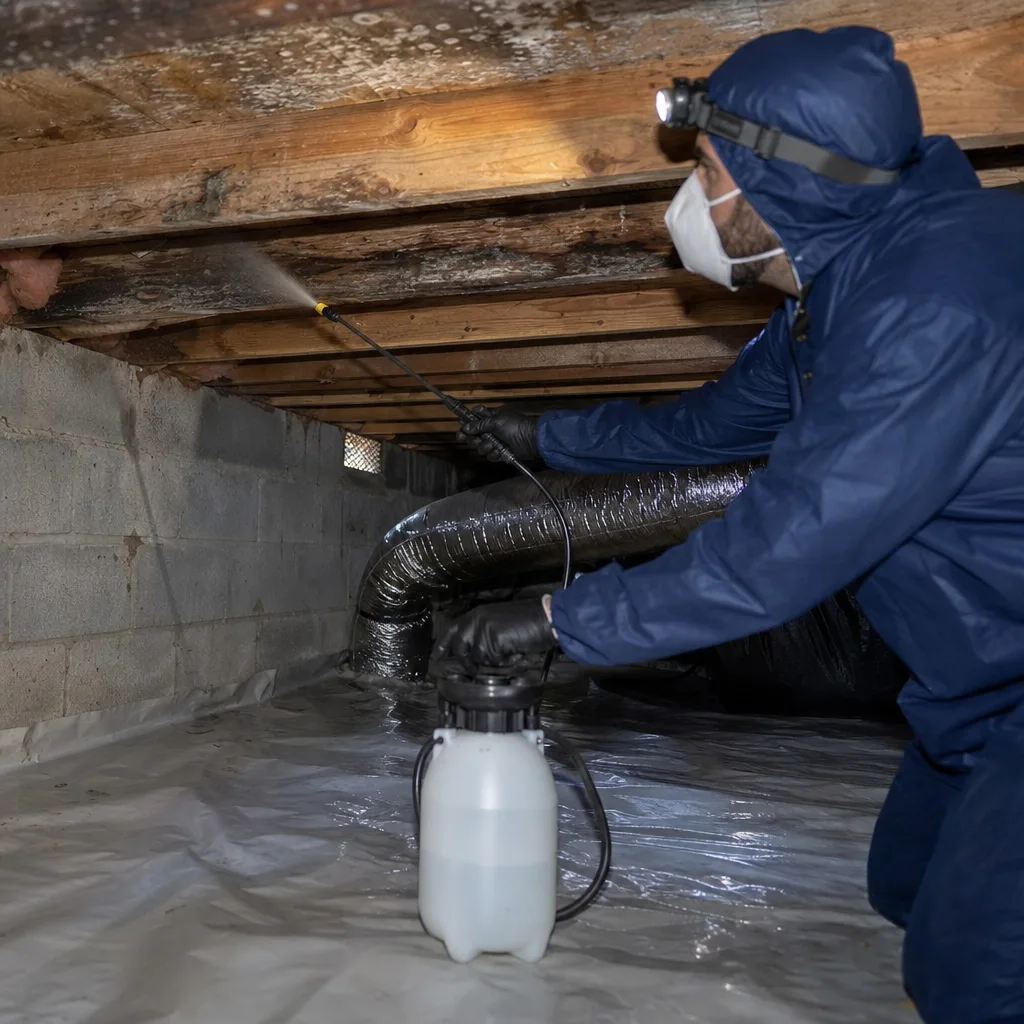
Crawl space treatment addresses the specific microclimate beneath raised foundations where ground moisture, limited ventilation, and organic materials create ideal mold conditions. You need it when crawl space inspections show growth on joists or subfloor, when indoor humidity persistently exceeds 60% despite HVAC operation, or when musty odors originate from below-grade areas. In Venice and Santa Monica, coastal fog and sandy soils that drain poorly produce crawl space humidity we measure at 75-85% during May and June. Our treatment includes vapor barrier installation over bare soil, dehumidification with Dri-Eaz units sized to the cubic footage, and application of EPA-registered antimicrobial to salvageable framing. We document vapor barrier seams, dehumidifier placement, and relative humidity readings on every visit.
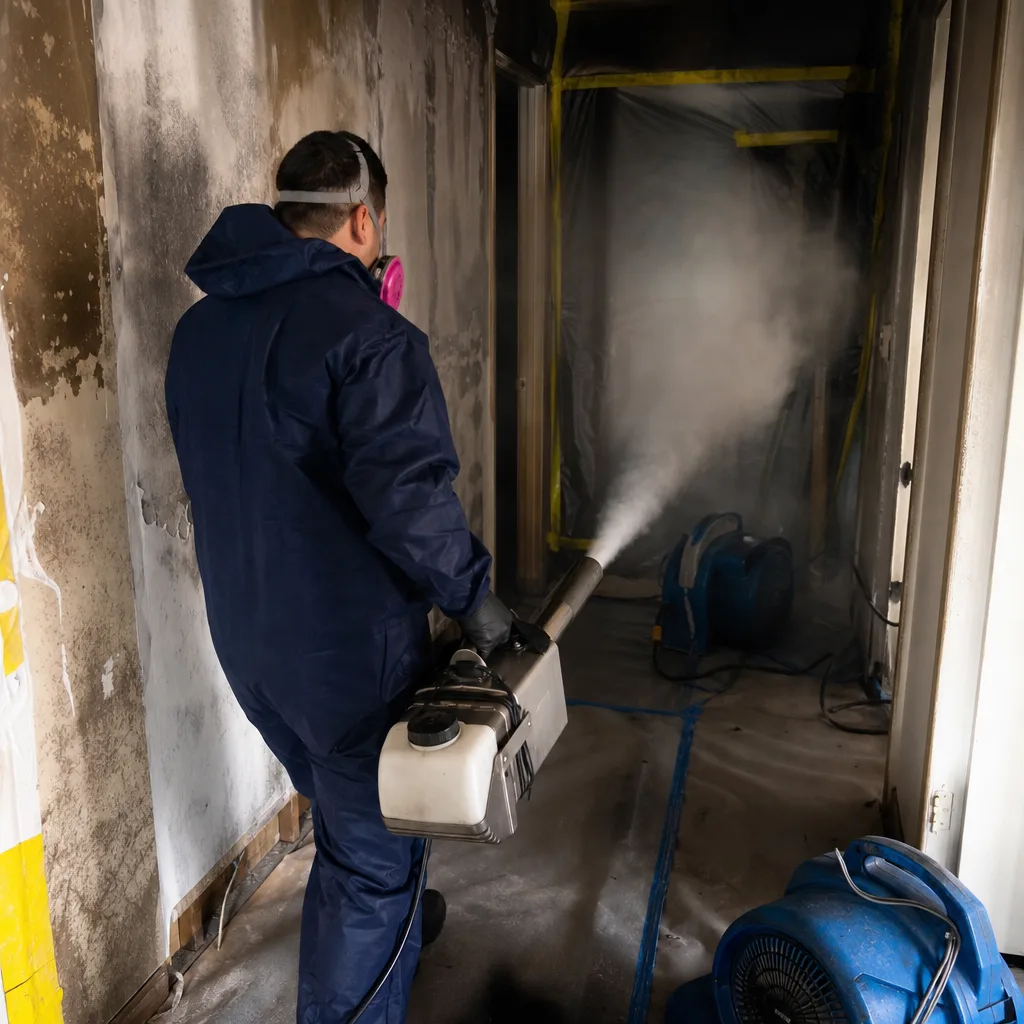
Moisture & Humidity Control
Moisture and humidity control prevents recurrence by correcting the water source and establishing drying protocols that maintain materials below 15% wood moisture content. You need it when mold returns after previous remediation, when building envelope failures continue to admit water, or when psychrometric data shows the structure cannot reach equilibrium with ambient conditions. In West Hollywood and Studio City, we’ve traced chronic moisture to failed deck waterproofing, irrigation overspray against stucco, and condensate lines that drain into crawl spaces rather than exterior daylight. Our technicians use thermo-hygrometers to measure vapor pressure differential - the force that drives moisture through materials - and specify repairs or equipment that change that math. Daily drying logs track temperature, relative humidity, and specific humidity until the structure stabilizes.
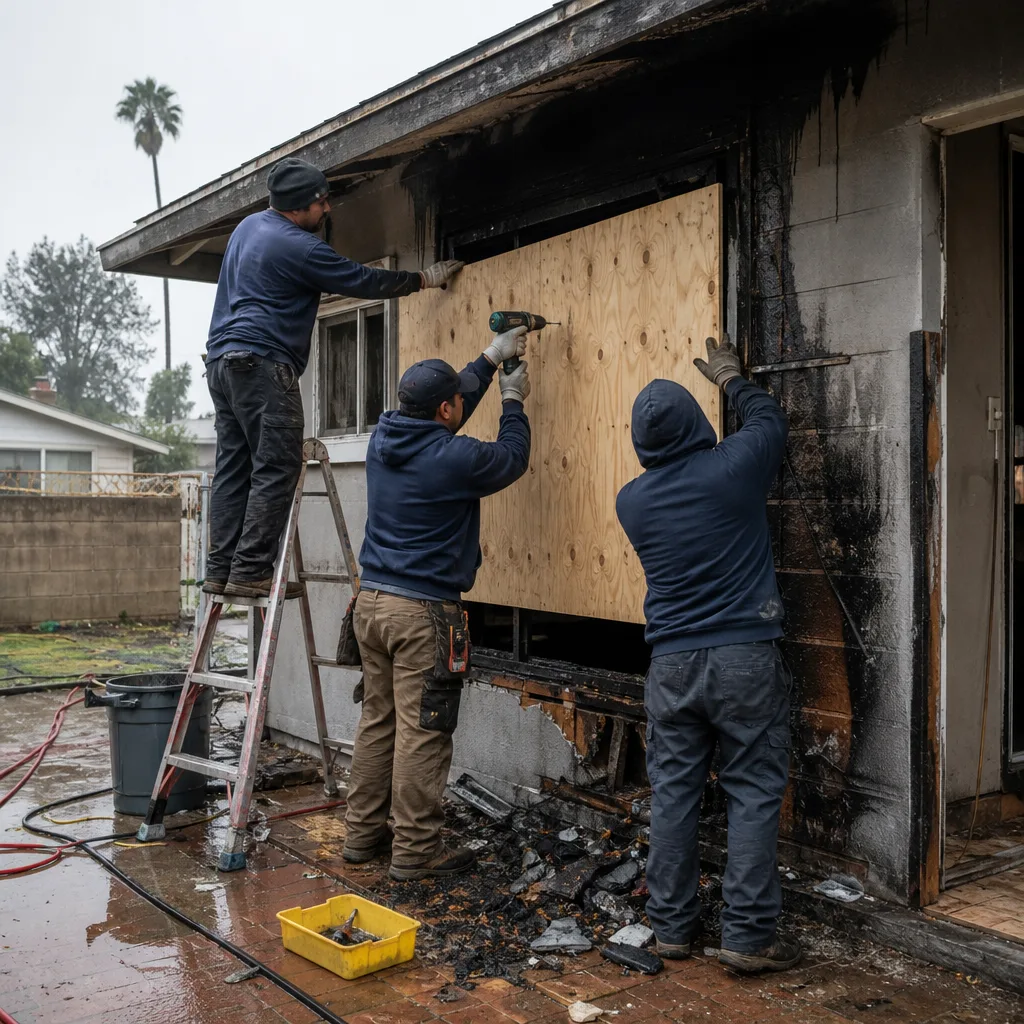
What happens when you call
- 1
A real person answersNo phone trees - you reach a local pro.
- 2
You get an upfront price rangeHonest numbers before anyone is dispatched.
- 3
A background-checked tech heads outLicensed & insured, dispatched right away.
- 4
You approve before work beginsNothing starts until you say go.
Signs You Need Mold Remediation Right Now
- Persistent musty odor that cleaning doesn’t remove. If bleach and ventilation fail to eliminate the smell within 48 hours, the source is likely hidden colonization inside walls, under flooring, or in HVAC ducts. In Los Angeles’s older housing stock, we’ve traced these odors to failed shower pan membranes in Westchester and to condensation inside Beverly Hills air handlers installed without proper drainage.
- Visible discoloration on walls, ceilings, or baseboards that spreads or darkens. Mold colonies typically appear as irregular patches in green, black, brown, or white, and they expand when moisture remains available. What starts as a quarter-sized spot behind a bathroom vanity can colonize an entire wall cavity within two weeks if the leak continues.
- Recent water damage that was dried without professional documentation. If a pipe burst, roof leak, or appliance failure was handled with fans and hope rather than moisture meters and drying logs, mold growth is probable. California’s 48-hour window for safe drying passes quickly, and most homeowners lack the equipment to verify that studs and insulation reached acceptable moisture content.
- Respiratory symptoms that worsen at home and improve elsewhere. Occupant health complaints - persistent cough, congestion, headaches, or fatigue - that correlate with time spent in the building warrant air quality testing even without visible mold. We’ve performed remediation in Culver City apartments where tenants had sought medical treatment for months before environmental testing identified the source.
- Peeling paint, warped baseboards, or soft drywall near plumbing fixtures. These are moisture signatures, not cosmetic defects. They indicate that water has compromised the material and likely created conditions for mold growth behind the visible surface. Delaying inspection allows the colony to expand and increases both remediation cost and the scope of material removal.
BeforeAfterOur Mold Remediation Process - Step by Step
- 1
Written estimate before any work begins. Haven Standard, Clause 1: we deliver a detailed scope with line-item pricing after inspection and testing, not before. Our technician documents moisture readings, photographs all visible growth, and explains what materials will be removed, what will be cleaned, and what equipment will run for how long. You sign the scope or you don’t proceed - no pressure, no verbal promises that evaporate when the crew arrives.
- 2
Containment and negative air pressure setup. We seal the affected area with polyethylene sheeting and install HEPA-filtered air scrubbers to create negative pressure, preventing spore migration to clean areas during removal. The scrubber model, filter rating, and airflow rate are noted on your job documentation.
- 3
Source removal and material disposal. Technicians remove non-salvageable materials following IICRC S520 standards, bagging contaminated debris in the work zone for transport to licensed disposal facilities. Every removed section is photographed with measurements. Salvageable hard surfaces receive HEPA vacuuming and antimicrobial application with dwell times documented.
- 4
Drying and dehumidification to specification. We deploy professional-grade drying systems - Dri-Eaz, Phoenix, XPOWER, and Injectidry units selected for the specific material and cavity type - and log psychrometric data daily. Tertiary drying, the final phase where deep structural moisture equalizes with ambient air, often takes longer than surface drying and is where less thorough contractors declare victory too early.
- 5
Clearance testing and final documentation. Third-party or independent air sampling confirms spore counts at or below outdoor baseline before we remove containment. You receive the complete photo record, daily moisture logs, equipment deployment chart, and the 365-Day Done Right Promise signed under The Haven Standard. If post-remediation testing fails, we correct at our expense - the guarantee has an address.
How Much Does Mold Remediation Cost in Los Angeles?
A typical contained mold removal in Los Angeles - one bathroom, a small kitchen area, or a localized closet - runs $1,200-$2,800 depending on whether drywall, tile backer, or flooring must come out. See our Mold Remediation cost guide for full pricing details. Whole-room treatment with HVAC decontamination and air scrubbing typically falls between $3,200 and $5,400. Extensive colonization involving multiple rooms, crawl space work, or black mold protocols with extended clearance testing ranges from $5,800 to $8,500+, with complex hillside homes in Brentwood or Bel Air sometimes exceeding that range due to access challenges and multiple containment zones.
| Scenario | Typical Range | Primary Cost Drivers |
|---|---|---|
| Contained area under 25 sq ft (bath, closet) | $1,200 - $2,800 | Material removal depth, disposal fees, clearance testing |
| Single room with HVAC concern | $3,200 - $5,400 | Air scrubber days, duct access, third-party lab fees |
| Multi-room or crawl space | $5,800 - $8,500+ | Containment complexity, dehumidifier runtime, structural repairs |
| Black mold (Stachybotrys) protocol | Add 25-40% | Enhanced PPE, extended clearance, specialized disposal |
What moves the price: square footage of colonized material, whether the water source is still active, accessibility (crawl spaces and attics add labor hours), and whether HVAC systems require internal cleaning. What doesn’t move it at DryMark Restoration Los Angeles: scope additions after work starts. Haven Standard, Clause 1 means the written price is the price.
To avoid overpaying, get any competitor’s estimate in writing and bring it to us - we offer a Free Second Opinion on any written estimate at no charge. Many Los Angeles homeowners discover that quotes lacking itemized scopes hide costs that appear as “change orders” once containment is up. Our estimate specifies every action, every material, and every piece of equipment with its daily rate.
What’s included in our free estimate: visual inspection, moisture mapping with thermal imaging, written scope with line-item pricing, and explanation of what documentation you’ll receive. What’s not included until you approve the scope: any intrusive testing, material removal, or equipment deployment. Call (424) 351-3396 to schedule.
Mold Remediation Near Los Angeles - Our Service Area
DryMark Restoration Los Angeles dispatches crews daily across the metro basin and coastal corridor. Typical response time for inspection appointments is same-day or next-morning in Culver City, Santa Monica, Venice, Beverly Hills, Westchester, Brentwood, Playa del Rey, West Hollywood, Inglewood, Hawthorne, and Studio City. Hillside properties in Brentwood and Bel Air sometimes require additional transit time for equipment trucks, but emergency containment for active water intrusion is available 24 hours a day. Whether your property sits on the coastal plain or the inland slope, we document the same moisture readings, photo records, and written scopes that satisfy Los Angeles County adjusters and out-of-state carriers alike.
Serving Los Angeles, CA - Our Local Coverage Area
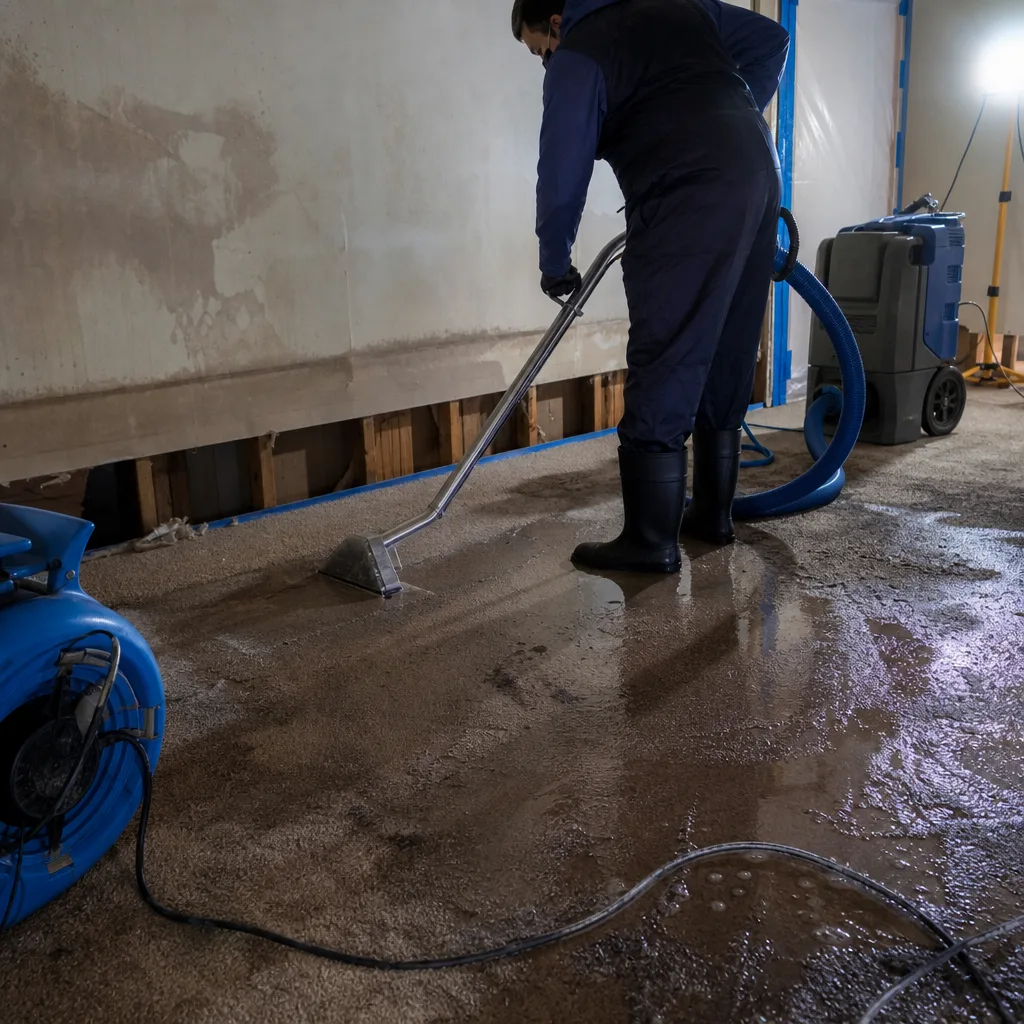
We’re based in the Los Angeles area and know this community well. Use the map below to see our service coverage - if you’re nearby, we can almost certainly help.
Frequently Asked Questions - Mold Remediation in Los Angeles
Mold remediation is the complete process of identifying, containing, removing, and preventing mold growth, while mold cleaning typically refers only to surface treatment of visible growth. Remediation includes source identification, air quality testing, controlled demolition of contaminated materials, and documentation that satisfies insurance and health department requirements. Cleaning without remediation leaves hidden colonization intact and provides no proof that the problem is resolved.
Most residential mold remediation in Los Angeles completes in 3-5 business days, with black mold protocols and extensive crawl space work extending to 7-10 days. The timeline depends on colonization extent, material removal requirements, and drying time to reach specified moisture content. We provide a written schedule with your scope and update it daily if conditions change - no surprises, no vague “we’ll be done soon.”
Contained projects typically run $1,200-$2,800, standard residential remediation $2,800-$5,400, and extensive or black mold jobs $5,800-$8,500+. Every estimate from DryMark Restoration Los Angeles is itemized in writing before work begins, with no additions once the crew is inside. Call (424) 351-3396 for a written estimate on your specific situation - estimates are free.
Yes. We regularly assess and continue drying protocols begun by other contractors or property owners using Dri-Eaz, Phoenix, XPOWER, and B-Air equipment, documenting readings to IICRC standards regardless of who placed the units. If your equipment is undersized for the space or has been running without moisture reduction, we’ll tell you directly and specify what’s needed to reach drying goals. We also deploy Injectidry systems for hardwood and cavity drying that standard units cannot address.
Emergency containment is available 24 hours a day, 7 days a week when mold growth threatens structural integrity or follows active water intrusion. We do not promise same-day completion for full remediation - that work requires scoped scheduling and written pricing per Haven Standard, Clause 1 - but we can establish containment, stop water sources, and begin drying immediately. Live phone coverage means you reach a person, not a recording, at any hour.
Every mold remediation job carries the 365-Day Done Right Promise under The Haven Standard: if mold returns to treated areas within one year due to workmanship or documentation failure, we correct it at our expense. The warranty is signed and dated, not verbal. Recurrence due to new water intrusion or failure to maintain specified humidity levels falls outside coverage, which is why we specify and document the moisture control measures that protect your investment.
Remove personal items from the affected area if safe to do so; our crew will handle furniture and fixtures that require protection. Ensure utility access for our equipment, and notify us of any occupant health conditions, pets, or security systems that might affect work scheduling. Do not attempt to clean or disturb visible mold before our inspection - disturbing colonies without containment can spread spores and complicate both remediation and insurance documentation. We’ll provide a specific preparation checklist with your written scope once the inspection is complete.
Schedule Your Mold Remediation Service in Los Angeles Today
Call (424) 351-3396 now to speak with a live dispatcher, or schedule your free inspection and written estimate at your convenience. Every job starts with a documented assessment, a line-item price you approve in writing, and the photo record that protects your claim. The 365-Day Done Right Promise under The Haven Standard applies from day one. No voicemail. No scope creep. No invoice surprises.
Written by Alicia Brennan, Owner at DryMark Restoration Los Angeles, serving Los Angeles since 2011.